library

Description

A Python toolbox for registering / fusing / stitching large multi-view / multi-positioning image datasets in 2-3D.

has topic
has function
Description

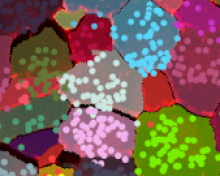
FishFeats: napari plugin to perform quantification of multimodal labeling at the single-cell level in 3D tissues.

FishFeats allows to perform together in the same pipeline several analysis to quantify epithelia cells in 3D tissue, analysing cell morphology, nuclei, immuno-staining or RNA expression. The plugin allows flexibility to let the user choose the relevant step for a specific biological question.


Description

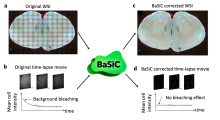
A python package for background and shading correction of optical microscopy images


BaSiCPy is a python package for background and shading correction of optical microscopy images. It is developed based on the Matlab version of BaSiC tool with major improvements in the algorithm.

Description

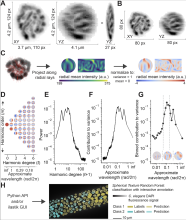
This toolkit extracts Spherical Textures: Angular projections of 2D or 3D image objects with subsequent spherical harmonics analysis.

From the author summary: "We introduce a novel method to extract quantitative data from microscopy images by precisely measuring the distribution of intensities within objects in both 3D and 2D. This method is easily accessible through the object classification workflow of ilastik, provided the original image is segmented into separate objects. The method is specifically designed to analyze the convex region in objects, focusing on the variation in fluorescence intensity caused by differences in their shapes or patterns."

Fig. 2 from reference publication
Description

3DeeCellTracker is a deep-learning based pipeline for tracking cells in 3D time-lapse images of deforming/moving organs.

The installation comprises a set of Jupyter notebooks and a library they depend on. The workflow steps include separate training and segmentation/tracking.

Examples of cell tracking from the reference publication are: ~100 cells in a freely moving nematode brain, ~100 cells in a beating zebrafish heart, and ~1000 cells in a 3D tumor spheroid.


Overall procedures of our method (Wen et al. eLife, 2021–Figure 1)